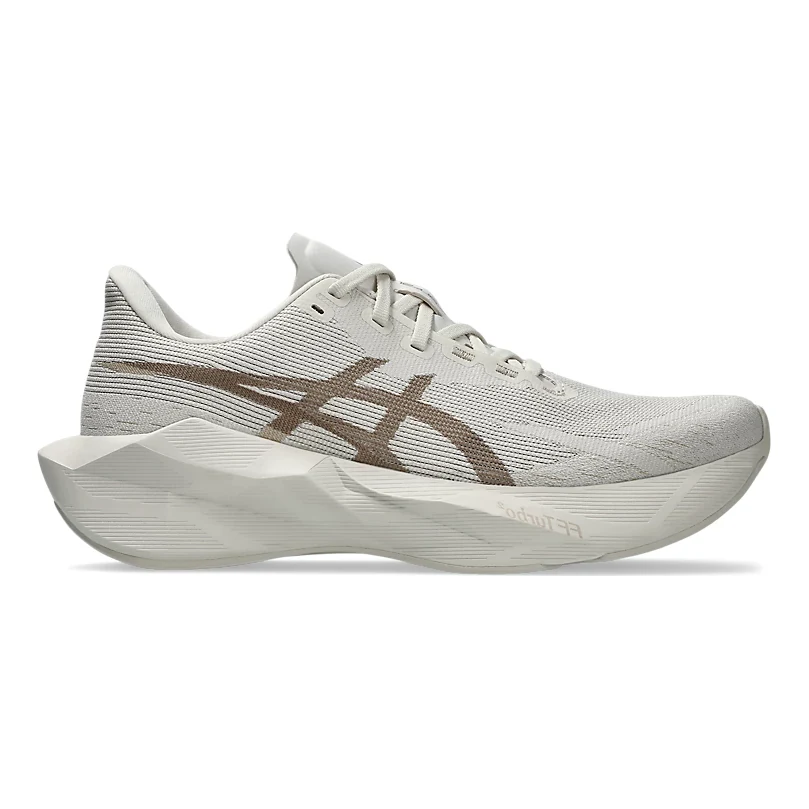
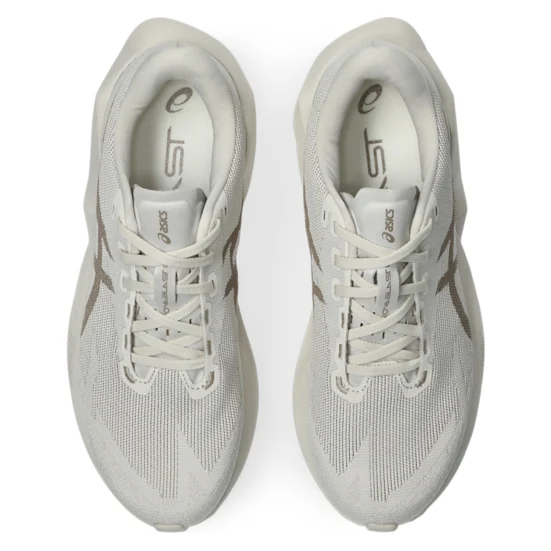
Does the ASICS Novablast 6 run true to size? Should you size up?
We checked, on 16,874 real feet. We worked out the inside measurements of the ASICS Novablast 6 Men's / Unisex in the standard width: the length, the width, and the forefoot volume (ball girth). Then we virtually fitted 16,874 real feet from our earlier in-store 3D foot scanners, the way a runner shopping online would: ASICS's size chart, including ASICS's note to go half a size up in running shoes.
ASICS size guide score
46/100
ASICS's size guidance online gave the right size for 46% of 16,874 feet.
Does the ASICS Novablast 6 run true to size?
For less than half of feet. If you follow ASICS's size guidance online, the Novablast 6 fits true to size for 46% of feet. Here, true to size means the size ASICS's online guidance gives you is less than a full size away from the size that fits best, with enough toe room and enough forefoot volume.
ASICS's size guidance gets the length right: with the note to go half a size up, the size chart gives almost every foot enough length. The guidance falls short on forefoot volume. ASICS makes a wide version of the Novablast 6, but ASICS's size guidance online gives shoppers no way to find out whether they need the wide version, so our score uses only the standard width. If ASICS's guidance showed shoppers how to pick between standard and wide, the score would have been 67.
Should you size up or down in the ASICS Novablast 6?
ASICS's size chart is shared across its shoes, but how well the chart works depends on the model. Here is where every foot landed in the Novablast 6, in the standard width, when we followed that chart and ASICS's note to go up half a size.
Following ASICS's size guidance online
- Right size from the size chart46%
- Sized up for more forefoot volume33%
- Sized up for toe room only0%
- Sized down for less forefoot volume21%
Share of 16,874 feet. Each foot is counted once.
- Right size from the size chart: 46% of feet got a size that fit both their foot length and their forefoot volume in the standard width. ASICS's online size guidance, including its note to go up half a size, worked well for this group in the Novablast 6.
- Sized up for more forefoot volume: For 33% of feet, the standard width had too little forefoot volume at the size the chart gave. In the standard width, going up a size was the only way to get more forefoot volume, and the bigger size also adds length in front of the toes. The wide version adds forefoot volume and keeps the length, if you already know you need a wide width.
- Sized up for toe room only: Almost no feet landed here: 31 of 16,874, which rounds to 0%. With the half size up, ASICS's size chart leaves almost every foot enough room in front of the toes.
- Sized down for less forefoot volume: For 21% of feet, the standard width had too much forefoot volume at the size the chart gave. The Novablast 6 has no narrow version, so a smaller size was the only way to get less forefoot volume. Because ASICS's note adds half a size of length, nearly all of these feet (3,550 of 3,562) still fit inside a size smaller than ASICS's guidance gave, but with less room in front of the toes.
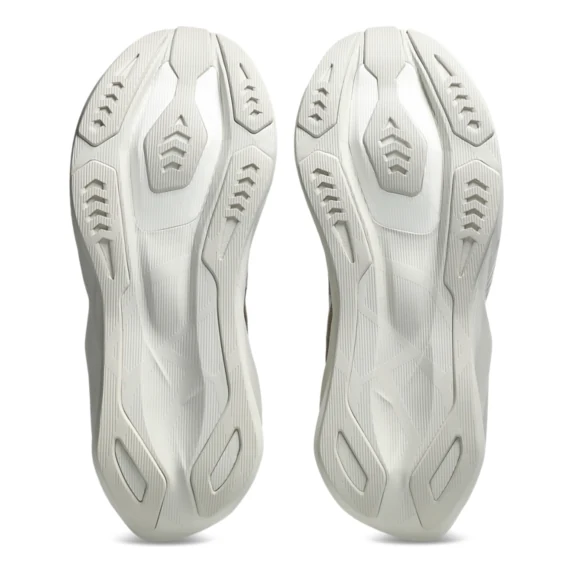
The Novablast 6 also feels a bit tighter than most running shoes under the arch. The bottom of the shoe is narrower than usual at the middle of the sole, so the sides of the shoe sit closer around the middle of your foot. Our numbers above do not include this part of the shoe, so keep this in mind if other running shoes already feel snug under the middle of your foot.
How we measured
We measured the standard width of the Novablast 6 and virtually fitted 16,874 real feet from our earlier in-store 3D foot scanners. Out of 17,311 foot scans, those 16,874 feet fall in the Novablast 6's size range (US men's 4 to 15). For every foot, we followed ASICS's size guidance online: the length chart, including ASICS's note to go half a size up, in the standard width. A difference of a full size or more between ASICS's size and the size that fits best counts as a miss. These numbers show how the Novablast 6 fits a large group of feet, not how the shoe feels on a run.